The Yamaha Raptor 700 is a powerhouse on the dunes, but its stock suspension is the weak link when you start catching serious air. Dune jumping places immense stress on the chassis, and the factory shocks simply are not designed to handle repeated hard landings from 20, 30, or even 50 feet. The stock springs are too soft, the damping is inadequate, and the lack of adjustability means you are stuck with a setup that works for trail cruising but falls apart in the whoops and bowls of glamis-style sand riding. A proper suspension overhaul, specifically upgrading to high-performance shocks like Elka or Fox Podium, is the single most transformative modification you can make for dune jumping. It not only improves your speed and control but also dramatically reduces the risk of injury and bike damage from bottoming out.
Understanding What Makes Elka and Fox Podium Special
Both Elka and Fox Podium are premium shock manufacturers with proven racing pedigrees, but they approach performance differently. Elka shocks, particularly the Stage 4 series, feature fully adjustable compression and rebound damping in both high and low-speed circuits. This means you can fine-tune the shock to handle everything from the initial impact of a landing to the rapid, small bumps of whooped-out sand approaches. They also use massive 46mm internal pistons that provide unparalleled oil flow control, keeping the shock cool and consistent even after multiple jumps in quick succession. Fox Podium shocks, on the other hand, are famous for their PDS (Position Sensitive Damping) technology, which adjusts damping force based on the shock’s stroke position. This gives you a plush ride in the initial travel but ramps up stiffness near the bottom to prevent harsh bottoming. Both brands offer spring rates suited to your weight and riding style, and both are constructed with anodized aluminum bodies that dissipate heat far better than the steel stock units.
The Benefits for Dune Jumping
For dune jumping, the difference between stock and premium shocks is night and day. With the stock setup, a moderate jump often results in a jarring bottom-out that sends a shockwave through your spine and the bike’s frame. Over time, this can crack welds, bend axles, and even cause the rider to lose footpeg grip upon landing. Elka and Fox shocks eliminate this problem by offering massive bottom-out resistance. Their high-speed compression damping circuits are designed to absorb the energy of a hard landing progressively, allowing the shock to use its full travel without slamming into the bump stops. Furthermore, the rebound damping control ensures that after compression, the shock returns to its extended position at a controlled rate. If rebound is too fast, the bike will pogo-stick and kick you off balance on the next whoop; if too slow, the shock will pack down and become harsh. With quality shocks, you can dial this in precisely, giving you the confidence to launch off the lip of a dune at full throttle, knowing the landing will be smooth and controlled.
Beyond Suspension: The Importance of Headlights
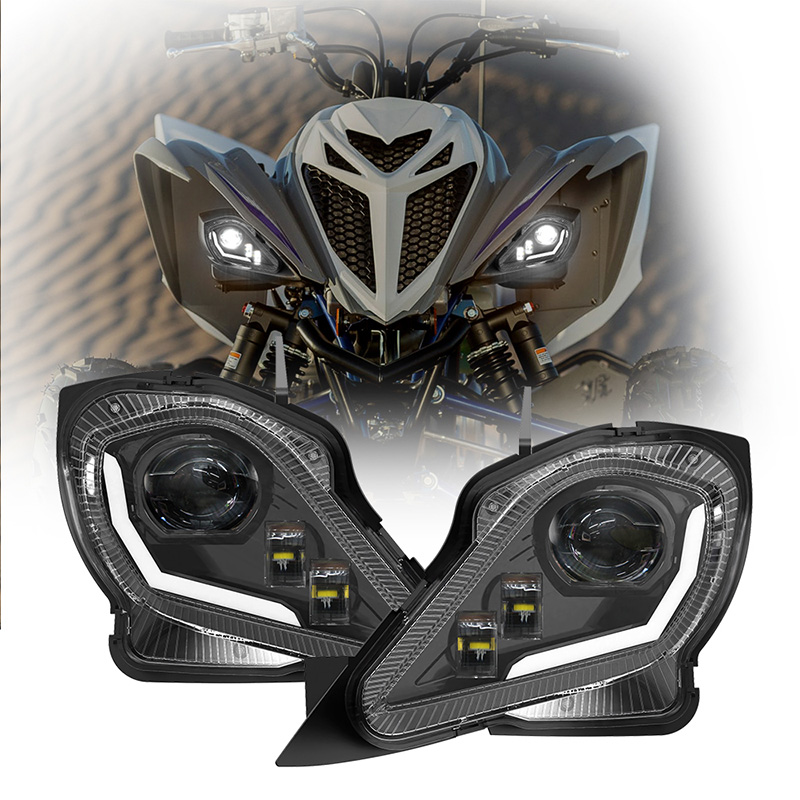
While suspension keeps you safe from the forces of jumping, your headlights keep you safe from what you cannot see. Dune jumping at night or during the golden hours of dusk is exhilarating, but the shifting sand can conceal abrupt drop-offs, razorback ridges, and soft pockets that can ruin a landing. The factory headlights on the Raptor 700 are notoriously weak, emitting a dim, yellowish beam that barely illuminates the approach to a jump, let alone the landing zone. Upgrading to an Yamaha Raptor LED headlight system is a critical complement to your suspension overhaul. A high-quality LED conversion or auxiliary light bar provides a crisp, white 6000K beam that cuts through the dust and sand haze, revealing terrain details that halogen bulbs simply hide. With proper LED lighting, you can accurately judge the face of a dune, spot the apex of a bowl run, and see the landing area long before your tires leave the sand. This allows you to commit fully to jumps with confidence, rather than riding nervously into the unknown. A simple plug-and-play LED bulb upgrade or a 12-inch light bar mounted on the front bumper makes an enormous difference, and it is one of the few modifications that directly enhances both safety and performance during night sessions.
Installation and Tuning Considerations
Replacing the stock shocks with Elka or Fox units is a straightforward bolt-on process, but proper setup is where the magic happens. You need to set the front and rear suspension sag based on your rider weight with full riding gear on. Typically, you want about 25% of total travel as static sag for dune riding. From there, adjust the compression clickers to control how the shock reacts to jump impacts, and the rebound clickers to manage how quickly it returns. A common mistake is setting everything too stiff; in sand, the suspension needs to absorb small chop while still holding up to big hits. It is also wise to upgrade the shock linkage bearings and swingarm pivot bushings at the same time, as these components wear out quickly under the heavy loads of dune jumping. Finally, consider raising the ride height slightly with longer shock bodies or adjustable preload rings, as this increases ground clearance for deep sand and helps keep the bike stable during high-speed runs. Once dialed in, an Elka or Fox Podium-equipped Raptor will not only jump farther and land softer but will also track straighter through the whoops and carve dunes with precision that the stock setup could never achieve.