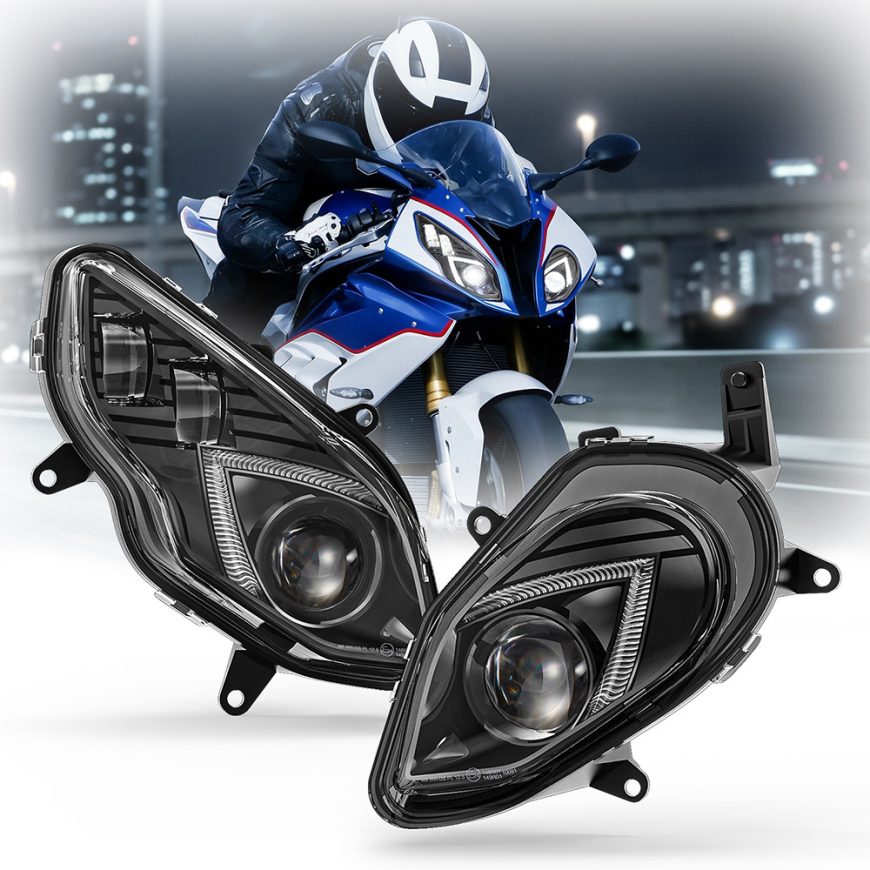
The 2018 BMW S1000RR represents the final chapter of one of the most distinctive visual signatures in modern motorcycling: the asymmetrical headlight. For nearly a decade, this “split-face” arrangement—a compact projector on the left paired with a larger, more angular lamp on the right—defined the S1000RR’s identity. While it polarized opinion, the design was never an exercise in mere styling. Every element of the asymmetry served a precise engineering purpose, rooted in the uncompromising pursuit of performance that has always characterized BMW’s liter-class superbike.
The primary motivation behind the asymmetric layout was weight reduction. According to Edgar Heinrich, Head of Design at BMW Motorrad, the decision to eliminate part of the reflector on one side saved approximately 130 to 150 grams compared to a symmetrical setup. On a machine where every gram is contested, this was a meaningful gain. The functional logic was straightforward: a single round projector on the left did not produce sufficient light output to meet street-legal illumination standards on its own. BMW therefore fitted a substantially larger lamp on the right side to satisfy regulatory requirements. Rather than duplicating that larger lamp on both sides—which would have added bulk and mass—the engineers accepted the visual imbalance in exchange for a lighter front end.
Beyond the weight savings, the BMW S1000RR asymmetric headlight carried a deliberate aesthetic reference to endurance racing. The shape and dimensions of the main headlight were inspired by the number plates affixed to endurance racing motorcycles, while the smaller high-beam lamp was a necessary concession to construction requirements. This “split-face” design, with its black grained divider running between the two lamps, created a visual tension that made the S1000RR instantly recognizable in a rearview mirror. The asymmetry also optically broke up the large painted surfaces of the upper fairing, lending the front end a lighter and more sporting appearance. The theme extended to the fairing side panels, where a large air outlet on the left handled heat extraction while a different aerodynamic vent occupied the right side.
Functionally, the 2018 S1000RR’s headlight assembly relied on halogen technology. Both the low beam and high beam positions used H7 55W bulbs, a specification that remained consistent through the final years of the asymmetric design. The low beam occupied the left side of the assembly, while the high beam sat on the right. This arrangement meant that nighttime illumination on low beam was handled by a single projector, with the high beam adding a broader and longer throw when activated. For owners seeking improved output, the aftermarket offered LED and HID conversion kits, though these required attention to the bike’s CANbus monitoring to avoid triggering dashboard warnings.
The 2018 model year marks a significant transition point. At EICMA in November 2018, BMW unveiled an entirely new S1000RR that abandoned the asymmetric headlight in favor of a symmetrical LED arrangement. Heinrich explained that with LED technology dramatically reducing the physical size of headlight components, recreating the asymmetry would have served no technical purpose: “We talked about making the LED elements asymmetrical, but it would have been stupid, and we don’t do designs just to look a certain way”. The original asymmetry existed to save weight and meet lighting norms; once LEDs made those constraints obsolete, the design evolved. For enthusiasts, the 2018 S1000RR thus stands as the last of its lineage—a machine whose face was dictated not by focus groups, but by the uncompromising laws of physics and the stopwatch.